


No Record Found.

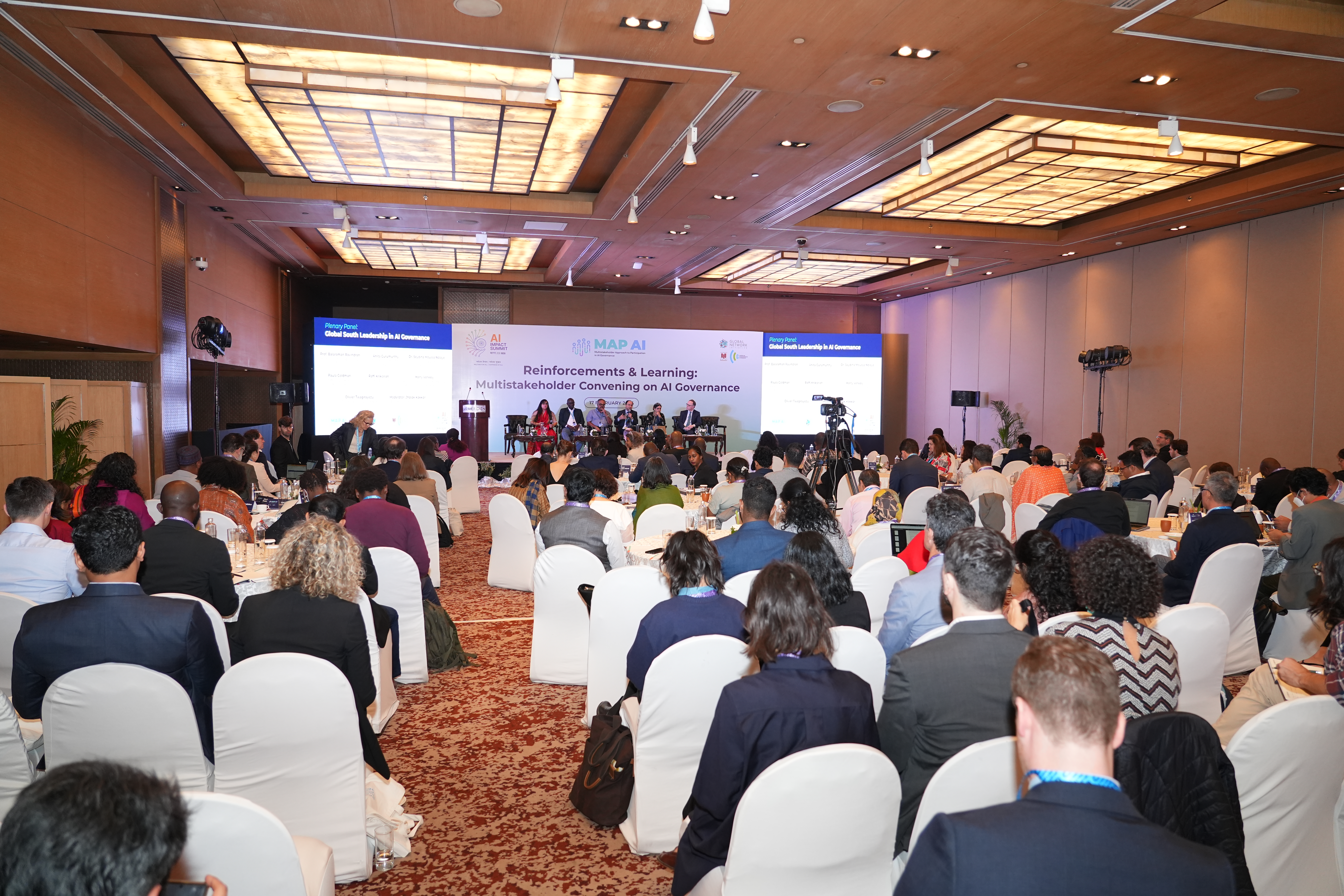
On 17 February, 2026, the Centre for Communications Governance (CCG) at National Law University Delhi and the Global Network Initiative (GNI) convened one of the largest official satellite events of the India AI Impact Summit. The “Reinforcements & Learning: Multistakeholder Convening on AI Governance” brought together policymakers, regulators, diplomats, industry leaders, technologists, civil society organisations, and academics from across the globe. In line with the Impact Summit, the organizers placed particular emphasis on highlighting voices from the Global South.
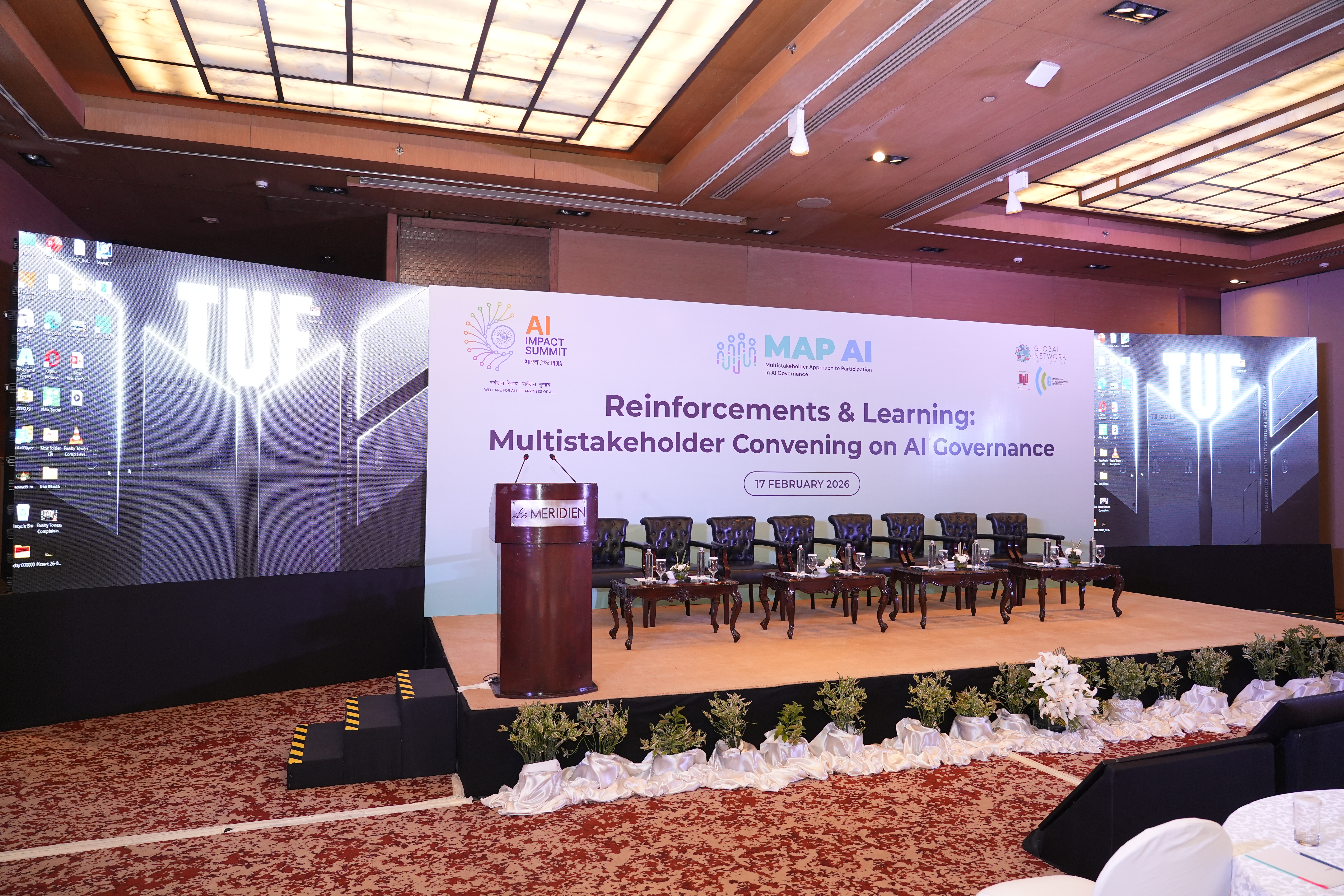
In attendance were representatives from the Governments of India, Brazil, Denmark, France, Germany, Kenya, South Africa; representatives from a range of academic institutions, including Ashoka University, Cambridge, ITT Madras, Oxford, Sydney University, and University of Taiwan, and officers from UNESCO, UN B-Tech, OECD, and other multilateral agencies; companies including AirBnB, Amazon, Anthropic, Google, SunbirdAI alongside a diverse cross-section of 100+ civil society organisations and independent experts from Africa, Asia, Latin America, and the Middle East.
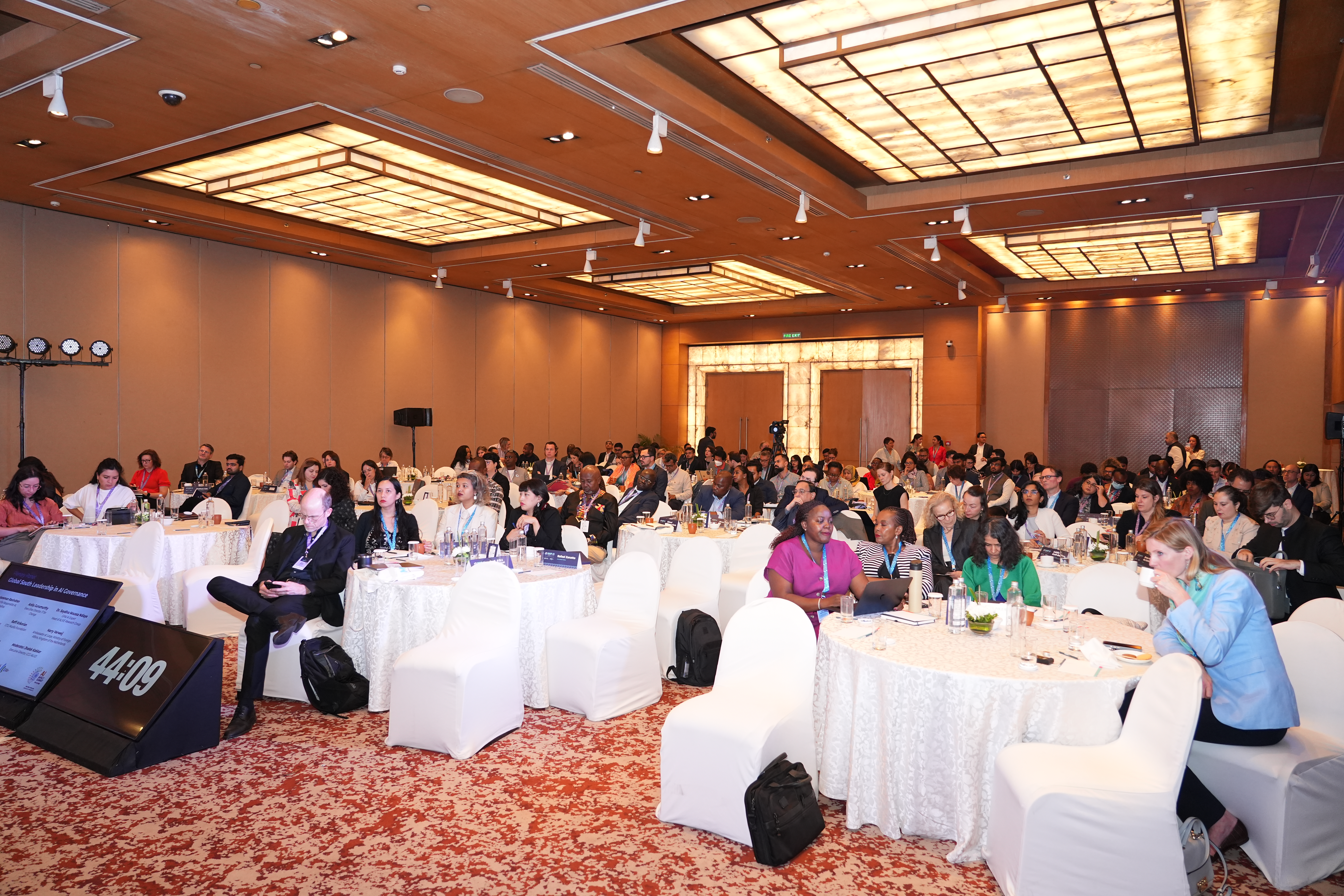
By centering Global South perspectives and embedding multistakeholder participation in governance design, the convening advanced a more equitable and representative model for global AI governance. Participants reaffirmed that meaningful Global South participation and multistakeholder governance are not optional, but foundational to building just, inclusive, and effective AI governance systems.
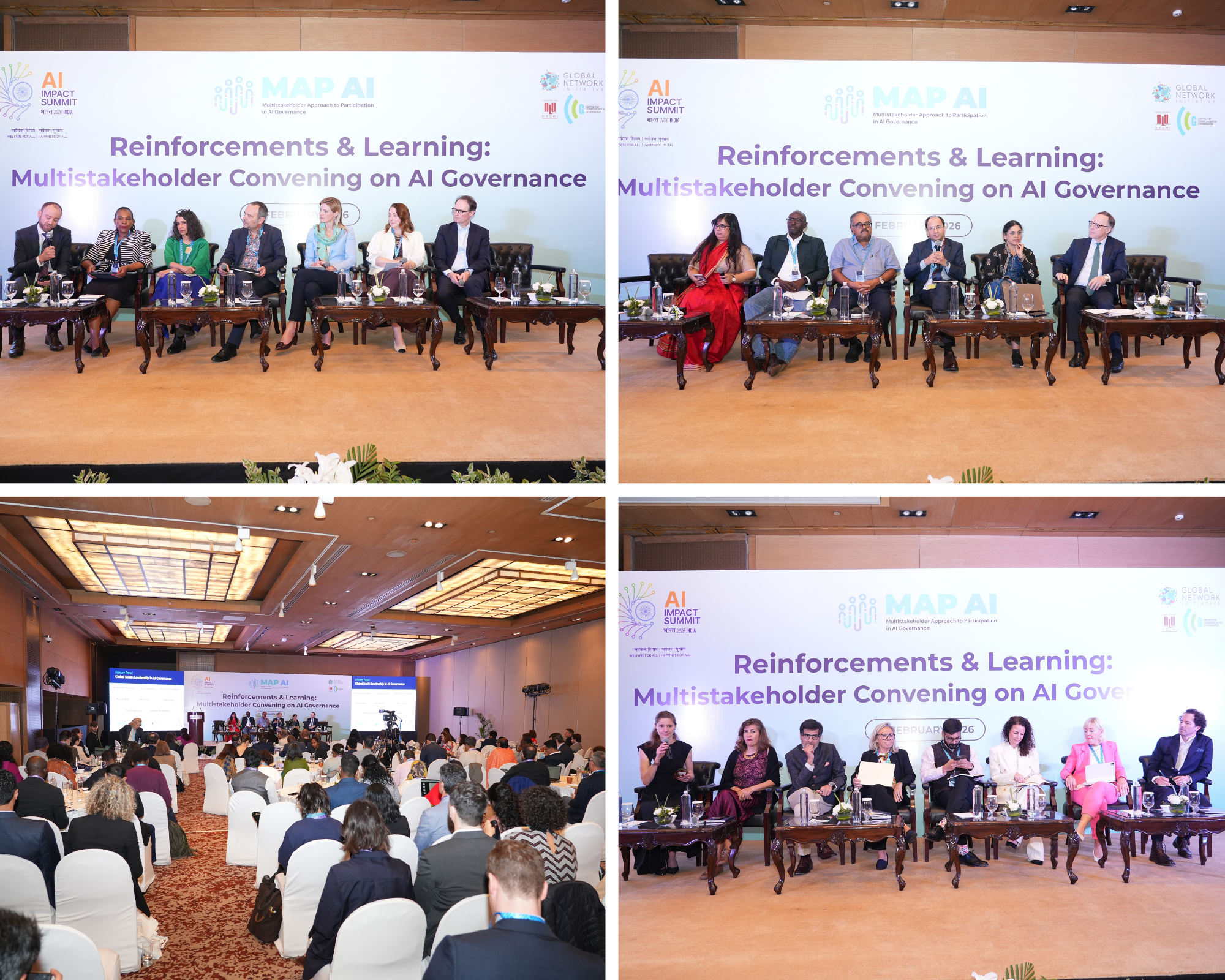
The convening focused on strengthening inclusive, participatory, and rights-respecting approaches to AI governance, emphasizing the need for genuine multistakeholder engagement in shaping global, regional, and national AI governance frameworks. It sought to move beyond fragmented and exclusionary governance models toward co-designed, participatory, and rights-respecting AI governance systems that are responsive to real-world harms, local contexts, and public interest priorities, particularly in countries and communities most affected by technological transformation.
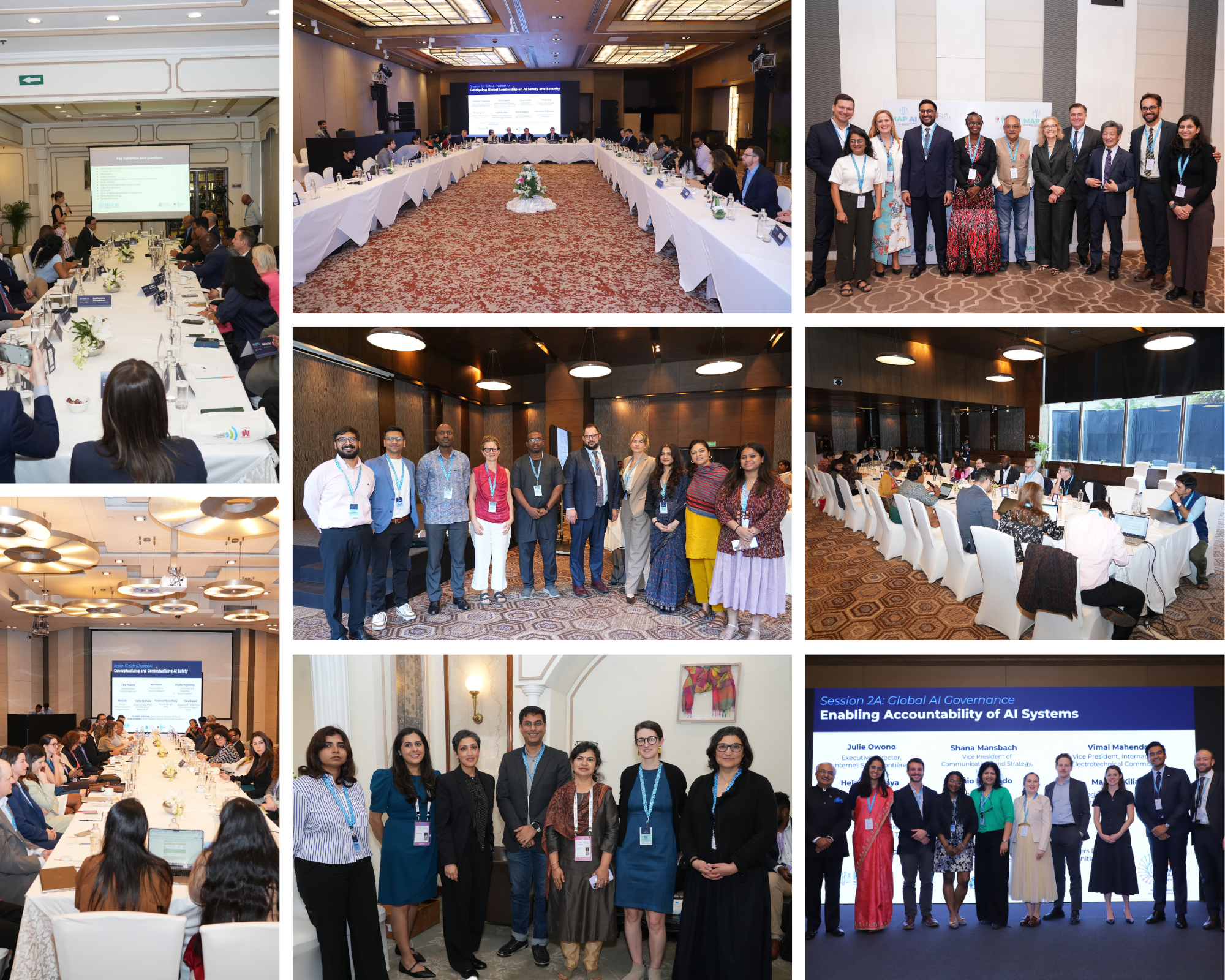
Over the course of three panels and eight workshops, participants engaged in plenary discussions and smaller workshops addressing the themes of collective responsibility, safe and trusted AI, and building context-driven AI infrastructure, with a cross-cutting theme of Global South leadership in AI.
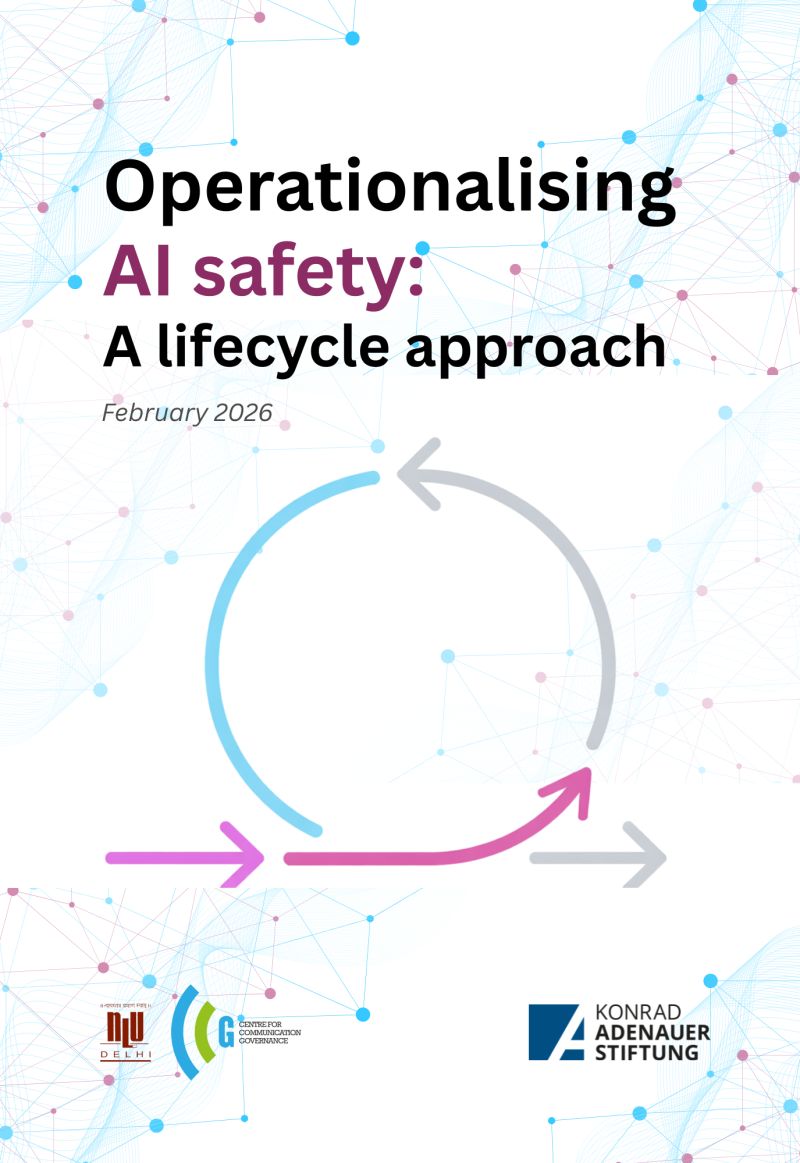
At this event CCG launched its latest report 'Operationalising AI Safety: A Lifecycle Approach.’ This report supported by Konrad-Adenauer-Stiftung (KAS) was launched by CCG’s team alongside the German Minister of Digital Strategy and Development, Hessian State Kristina Sinemus and KAS’ Stefan Friedrich and Olivia Schlouch. The report explores how rapidly expanding AI systems can be governed responsibly in high-stakes contexts, with a focus on the Global South. It emphasises balancing AI’s transformative potential with the need to anticipate and mitigate risks, offering a lifecycle-based framework that accounts for infrastructural constraints, linguistic diversity, and distinct cultural realities.
For more on MAP-AI click here.
Important Details
CCG-NLUD and GNI
17 Feb 2026
Le Meridien, New Delhi


